

React with full server power: from SSR to API routes, Every application is AI-ready. Add AI features where they make sense for your project. and everything in one framework
Decisive factors:
React alone is a UI library. Next.js turns it into a complete production framework: routing, rendering, data fetching, caching, optimization, and deployment, all from a single source, without manually assembling individual libraries.
The decisive advantage: you choose the optimal rendering strategy per page. Marketing pages are statically pre-rendered for maximum load speed and SEO. Dashboards render server-side with real-time data. Interactive components hydrate on the client. Next.js orchestrates all of this automatically, so our team focuses on features instead of infrastructure.
With Server Components and the App Router, Next.js has initiated a paradigm shift: less JavaScript on the client, faster load times, better SEO, with an unchanged developer experience. The result is web applications that feel like native software while achieving outstanding Lighthouse scores.
Strategic advantages for your business
Choosing Next.js affects more than the frontend technology. It influences your SEO strategy, load times, infrastructure costs, and the speed at which new features go into production.
- Optimal performance without manual tuning. Next.js optimizes automatically: images are delivered in modern formats and appropriate sizes, fonts load without layout shift, JavaScript is split per route. Your application achieves excellent Core Web Vitals without manual optimization effort.
- SEO as an architecture feature. Server-side rendering and static generation deliver fully rendered HTML pages to search engines. The Metadata API, structured data, and automatic sitemap generation are built into the framework. SEO is not an afterthought, it is part of the architecture.
- Full-stack without infrastructure overhead. API routes, Server Actions, and middleware run directly in Next.js. For many applications, a separate backend server becomes entirely unnecessary. Fewer moving parts mean less maintenance, fewer sources of error, and faster development cycles.
- Flexibility in rendering strategy. Static site generation for marketing pages, server-side rendering for dynamic dashboards, incremental static regeneration for content pages: Next.js enables the optimal strategy per route. No compromises between performance and freshness.
- Enterprise-proven ecosystem. Netflix, TikTok, Twitch, Hulu, Nike, and the Washington Post run Next.js in production. Vercel continuously invests in framework development, enterprise support, and global edge infrastructure. The technology is not an experiment, it is an industry standard.
Facts and figures
0
+
Years
of Experience
0
+
Team
Members
+
0
%
Long-term
Partnerships
A process that creates planning certainty
Every project follows a structured process with clear responsibilities, defined milestones, and transparent communication. At every stage, you know where your project stands, what comes next, and which decisions are due.
-
Strategic analysis and rendering strategy:
Together we define which pages are rendered statically, server-side, or in a hybrid setup. SEO requirements, real-time data needs, and performance goals drive the architecture decisions. You receive a reliable assessment of effort and timeline.
-
Component architecture and data strategy:
Based on the analysis, we design the component structure, the server/client component split, and the data fetching strategy. Caching concepts, revalidation, and API design are considered from the very beginning.
-
Iterative implementation with defined milestones:
Development takes place in clearly defined sprints with measurable interim results. Preview deployments enable feedback after every commit. Course corrections are possible at any time without additional costs.
-
Quality assurance and performance monitoring:
Unit tests, integration tests, and end-to-end tests secure the functionality. Lighthouse audits, Core Web Vitals tracking, and bundle analysis ensure that performance standards are consistently met.
-
Deployment and edge optimization:
We set up the optimal deployment infrastructure, whether Vercel, AWS, Cloudflare, or self-hosted. Edge functions, ISR caching, and CDN configuration are optimized for your requirements. CI/CD pipelines automate the entire release process.
-
Long-term maintenance and strategic development:
After launch, we secure stable operation through proactive monitoring, timely updates for Next.js version jumps, and regular dependency updates. We plan strategic enhancements together with you on a quarterly basis.
Typical use cases
Next.js delivers its greatest value where performance, SEO, and development speed are equally critical, from content portals to data-driven business applications.
Corporate websites and marketing platforms
Statically pre-rendered pages with outstanding load times and perfect SEO. Content editors work through a headless CMS, and changes are delivered automatically via ISR without redeployment.
SaaS platforms and web apps
Complex business applications with server-side rendering for fast initial load times. Server Actions simplify data mutations, while middleware controls authentication and authorization at the edge.
Ecommerce and product catalogs
Thousands of product pages statically pre-rendered for maximum performance and SEO. Dynamic elements like the shopping cart and availability checks load client-side. ISR updates prices and stock without a full rebuild.
Content portals and media sites
Editorial content that loads in milliseconds. Headless CMS integration, automatic image optimization, and structured data for Google News and Discover. Here, performance is directly tied to revenue.
Dashboards and data platforms
Server-rendered dashboards with real-time data connections. Server Components drastically reduce the JavaScript footprint on the client. Streaming SSR displays data progressively while further queries are still running.
Multi-tenant platforms
Edge middleware enables tenant-specific routing, theming, and authentication without a backend round trip. Every tenant receives an individualized experience on shared infrastructure.
Customer portals and self-service
Authenticated areas with server-side rendering for fast navigation. Server Actions enable secure data mutations without separate API endpoints. Optimistic UI ensures a reactive user experience.
Internationalization and multilingual sites
Next.js offers built-in i18n routing with automatic locale detection. Static generation per language secures optimal performance and SEO for every market, without additional infrastructure.
Technologies that strengthen Next.js projects
Next.js forms the framework. For the overall system, we rely on proven technologies that work together seamlessly, from the backend and the data layer to the styling.
Collaboration that fits your structures
Whether fixed budgets, iterative development, or a long-term partnership, we work in the model that matches your internal approval processes and planning cycles.
Do we need a separate backend for Next.js?
Not necessarily, and that's actually one of the strategic advantages. Next.js can function either as a full-stack solution or as a pure frontend.
Option 1: Next.js as a full-stack framework
- API routes: Define REST endpoints directly within the Next.js application
- Server actions: Handle data changes without a separate API layer, type-safe and callable directly from components
- Middleware: Authentication, redirects, and header manipulation at the edge level
- Database access: Direct access from server components via ORMs like Prisma or Drizzle
Ideal for:
New projects without an existing backend, MVPs, content platforms, and projects with low to medium backend complexity
Option 2: Next.js as a frontend with a separate backend
- Laravel as an API: Complex business logic, queue processing, event systems
- Headless CMS: Storyblok, Contentful, Strapi, or Statamic for content management
- Microservices: Next.js as a BFF (backend for frontend) in front of existing services
Ideal for:
Projects with an existing Laravel backend, complex business logic, compliance requirements, or multi-channel architectures
Our recommendation
We analyze your requirements and recommend the right approach for your project. In many cases, we use Next.js for the frontend and simple API logic, complemented by Laravel for complex backend operations, giving you the best of both worlds.
The result: Next.js gives you the flexibility to work with or without a separate backend. The decision depends on your complexity, not on framework limitations.
How does Next.js perform when it comes to SEO?
SEO is one of Next.js's core strengths, and the most common reason companies switch from client-side React to Next.js. Search engines receive fully rendered HTML pages, not empty JavaScript shells.
Server-side rendering for search engines
- Complete HTML: Every page is rendered server-side and delivered to crawlers as a finished HTML page
- No JavaScript dependency: Search engines don't need to execute JavaScript to index content
- Fast indexing: Google and Bing crawl pre-rendered pages more efficiently than JavaScript SPAs
Built-in SEO features
- Metadata API: Title, description, Open Graph tags, and structured data can be defined per page, either statically or dynamically
- Automatic sitemap generation: Through configuration or dynamically generated from the database
- Canonical URLs: Automatic handling of trailing slashes and URL normalization
- robots.txt: Built-in configuration without separate file management
Performance as an SEO factor
Google weighs Core Web Vitals as a ranking factor. Next.js automatically optimizes:
- LCP (Largest Contentful Paint): Automatic image optimization and prioritization of visible content
- FID/INP (interactivity): Server Components minimize the amount of JavaScript on the client
- CLS (layout stability): Font optimization and automatic size attributes for images prevent layout shifts
The result: Next.js solves the fundamental SEO problem of React applications. Your pages are fully accessible to search engines, load quickly, and meet Google's Core Web Vitals requirements.
How long does it take to develop a Next.js application?
Next.js significantly speeds up development compared to a manually configured React application. Routing, rendering, optimization, and deployment are handled by the framework, so your team can focus on features.
Typical timeframes
- Corporate website / marketing platform (SSG, headless CMS): 4-8 weeks
- SaaS dashboard (SSR, authentication, database integration): 10-16 weeks
- E-commerce platform (ISR, product catalog, checkout): 12-20 weeks
- Enterprise portal (multi-tenant, complex business logic): 18-30 weeks
What influences the timeframe
Speeds things up
- Finished UI designs with a clear component structure
- Existing API or headless CMS already in use
- Use of established UI libraries (shadcn/ui, Radix)
- Vercel as the deployment platform (zero config)
Extends the timeline
- Complex real-time features (WebSockets, collaboration)
- Migrating an existing application alongside day-to-day operations
- Extensive internationalization with locale-specific content
- Strict performance budgets and accessibility requirements
Next.js-specific time advantages
- No setup overhead: Routing, build system, and optimization come preconfigured
- Preview deployments: Faster stakeholder feedback through automatic preview URLs
- Hot module replacement: UI changes are visible within milliseconds
The result: Next.js significantly reduces infrastructure overhead. The time saved goes directly into features and user experience.
Is Next.js future-proof? How is the framework evolving?
Next.js is developed by Vercel, a company with over $250 million USD in funding that focuses exclusively on frontend infrastructure and developer experience.
Current Development
- App Router: Stable, production-ready architecture with React Server Components, layouts, and streaming SSR
- Turbopack: Webpack's successor, built in Rust, delivering up to 10x faster development builds
- Server Actions: Simplified data mutations without an API layer, stable since Next.js 14
- Partial Prerendering: Combines static and dynamic rendering within a single route
The Ecosystem
- Vercel: Billions invested in the framework, edge infrastructure, and enterprise support
- React Team: Close collaboration between Vercel and Meta's core React team; Next.js serves as the reference framework for new React features
- Community: Over 125,000 GitHub stars and an active ecosystem of plugins and integrations
- Companies: Netflix, TikTok, Twitch, Nike, Notion; Next.js is the standard for high-performance web applications
Risk Assessment
- MIT License: Fully open source, no vendor lock-in
- Self-Hosting: Next.js can run on any Node.js server, with no dependency on Vercel
- React as a Foundation: Even in the hypothetical case that Next.js were to be discontinued, your React expertise and most of your code remain transferable
- Developer Availability: React/Next.js developers are widely available on the market
The bottom line: Next.js is the most widely used React framework, backed by a well-funded company working closely with the React team. Your investment is strategically secure.
What are Server Components and why do they matter?
React Server Components (RSC) represent the most significant paradigm shift in the React world since Hooks. Components render on the server and send no JavaScript to the client - only the finished HTML.
How it works
- Server Components: Render on the server, with access to the database, file system, and APIs. Send only HTML to the client, no JavaScript bundle
- Client Components: Render in the browser, with access to browser APIs (useState, useEffect, event handlers). Are sent to the client as JavaScript
- The mix: Server and Client Components coexist on a single page. Only interactive parts are shipped as JavaScript
Concrete benefits
- Smaller bundles: A typical Next.js app with Server Components sends 30-50% less JavaScript to the client
- Faster load times: Less JavaScript means faster parsing, faster hydration, and faster interactivity
- Direct data access: Server Components can access the database directly, no API layer, no waterfall requests
- Security: API keys, database credentials, and sensitive logic stay on the server and never reach the client
What this means for your project
You get an application that ships less JavaScript, loads faster, and is more secure, without compromising on interactivity. The choice between server and client is made on a per-component basis, not for the entire application at once.
The result: Server Components aren't a trend, they're the future of React. Next.js is the first framework to implement them as production-ready.
What does deployment look like for a Next.js application?
Next.js offers maximum flexibility when it comes to deployment - from Vercel to AWS to self-hosting.
Option 1: Vercel (recommended for most projects)
- Zero-config deployment: A git push triggers an automatic build and deployment
- Preview deployments: Every pull request gets its own URL for feedback and testing
- Edge network: Static content is delivered globally via CDN, while server logic runs on edge functions
- Monitoring: Built-in analytics, Web Vitals tracking, and error reporting
Option 2: AWS / cloud providers
- AWS Amplify: Managed hosting with SSR support and CDN
- AWS Lambda + CloudFront: Serverless deployment for maximum scalability
- Containers (ECS/EKS): Ideal for teams with existing container infrastructure
- Cloudflare Pages: Edge-based deployment with Workers integration
Option 3: Self-hosting
- Node.js server: Next.js running as a Node.js application on your own infrastructure
- Docker: Containerized for consistent deployments
- Static export: Possible for purely static sites, even without a Node.js server
Our CI/CD strategy
- Automated builds: Every commit triggers a build and tests
- Preview environments: Stakeholders can review features before they're merged
- Staged rollouts: Gradual delivery to user groups
- Rollback capability: Instant rollback to previous versions
The result: You're not locked into a single provider. We recommend the deployment strategy that best fits your infrastructure, budget, and compliance requirements.
What sets Next.js apart from a plain React application?
React is a UI library, Next.js turns it into a production-ready full-stack framework. The difference isn't about the UI layer, it's about everything an application needs in production.
What Next.js adds
- Routing: File-based routing instead of manual configuration with React Router. Nested layouts, loading states, and error boundaries are built directly into the routing system
- Rendering strategies: SSR, SSG, ISR, and client-side rendering, all configurable per route. A pure React app can only render client-side
- Server Components: Components render on the server and send no JavaScript to the client, resulting in smaller bundle sizes and faster load times
- API routes & Server Actions: Backend logic lives directly in the Next.js application, without a separate server
- Automatic optimization: Images, fonts, scripts, and code splitting are all handled by the framework
When plain React is enough
- Applications without SEO requirements (internal dashboards, admin panels)
- Projects that already use a full-stack framework like Inertia.js + Laravel
- Very simple SPAs without server-side logic
When Next.js is the better choice
- Public-facing applications where SEO and load times are business-critical
- Projects that want to combine server and client logic in a single framework
- Teams that prefer an opinionated setup over choosing every library themselves
The result: Next.js is React with production infrastructure. It solves the problems that have to be handled manually in pure React projects, including routing, rendering, optimization, and deployment.
Thank you for your trust!
We have safely received your message and are delighted about your interest. Our team is already reviewing your inquiry carefully and will get in touch with you within one working day.
Should you have any further questions or require additional information in the meantime, please do not hesitate to contact us. We are here to assist you and make your concerns our highest priority.
Insights
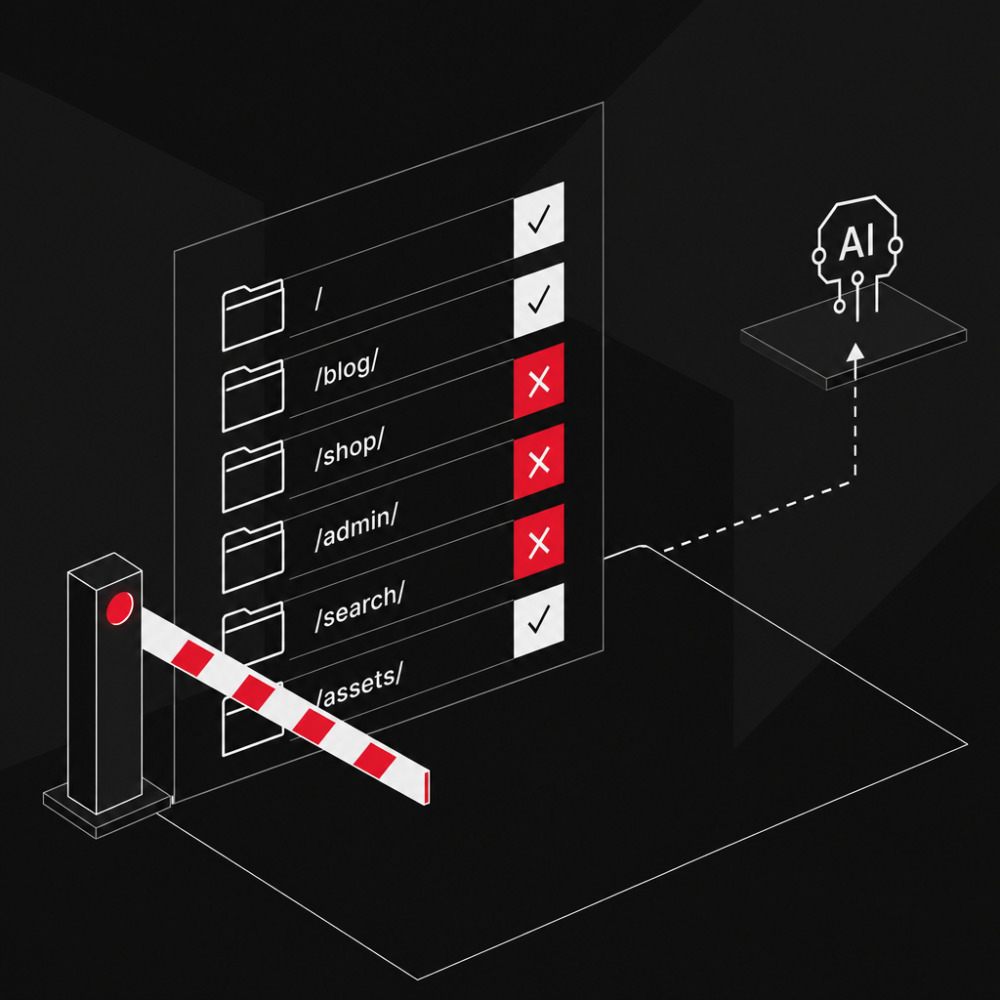
Creating and Properly Configuring a robots.txt
 Max Callsen
To the post
Max Callsen
To the post
-
Webdevelopment
22. June 2026
Ralph Wiggum as a Method: What Autonomous AI Coding Loops Mean for Software Commissioning
 Jonas Emde
-
Webdevelopment
21. May 2026
Developing Better Abstractions: How Declarative API Design Future-Proofs Software Projects
Jonas Emde
-
Webdevelopment
11. May 2026
Agent-based Software Development: When Writing Code Becomes Secondary
Jonas Emde
-
Webdevelopment
08. May 2026
Jevons Paradox in Software Development: Why AI Creates More Jobs, Not Fewer
Jonas Emde